
The signals on what consumers want next don’t agree. That’s a problem, because a line gets set at kickoff, 12 to 18 months before its season. What goes into it can’t come from whichever headline is loudest. Put four recent signals side by side and they point in different directions. Some even use the same words for different things.
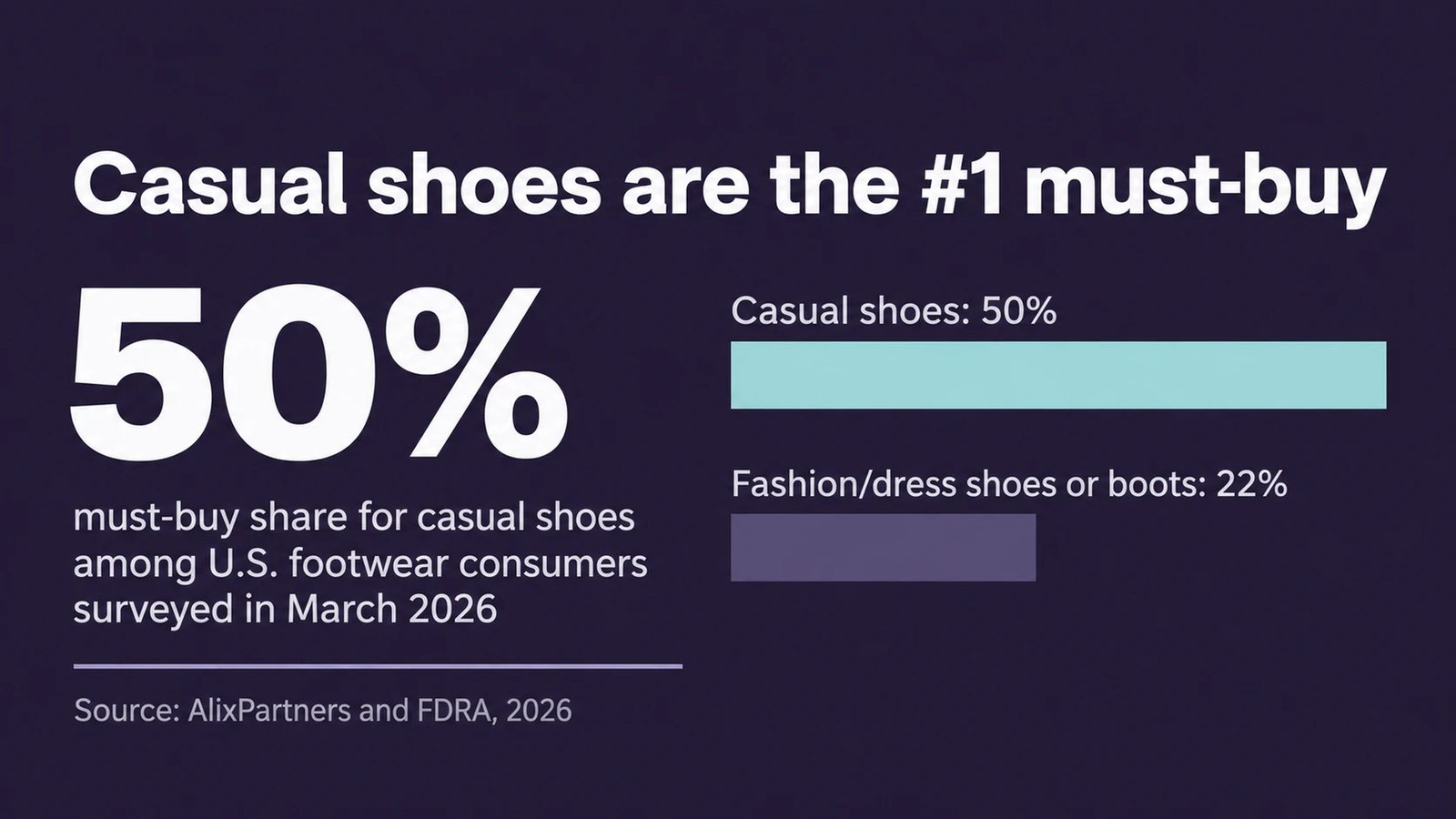
Start with a national survey. This spring, AlixPartners and FDRA polled 1,006 U.S. footwear consumers ages 15 and above, a nationally representative sample. Purchase intent fell in all five categories versus 2025. Casual shoes fell least, a net 1 percent. The other four fell a net 5 to 16 percent. Casual is also the top must-buy, at 50 percent, up 5 percentage points on last year. Fashion and dress shoes or boots sit lowest, at 22 percent, and the report says they have the least staying power.
Casual is a loose word, though. In consumers’ definition it spans athletic sneakers (65 percent), non-athletic sneakers (58 percent), sandals (56 percent), clogs (34 percent), and loafers (33 percent). The report notes a possible gap between what consumers mean by casual and what the industry means. It also says long-cycle fashion bets often mismatch what consumers actually want, especially in non-athletic categories. Among respondents spending less on shoes, the top reason was buying shoes that work for multiple occasions. More than a third cited it.
Now a different reading. In its second-quarter results, Caleres CEO Jay Schmidt said fashion footwear has breakout momentum and is meaningfully outperforming lifestyle athletic products quarter to date. At Famous Footwear, he said, a later back-to-school season and softness in lifestyle athletic pressured sales and margins. The company is realigning its assortment quickly to match changing consumer demand. Caleres’ fashion footwear may not mean the same thing as the survey’s fashion and dress shoes or boots, so the two readings can’t simply be stacked against each other. Realigning in season is a response to a line that’s already built. What goes into the next line is a separate decision.
Then the teens. Piper Sandler’s fall survey of nearly 9,000 U.S. teens ages 13 to 19 put athletic brands’ share of teen fashion at 29 percent, down from 32 percent last year and from a high of 44 percent three years ago. It also reports teen footwear spending down 1 percent. That figure covers athletic brands across all of teen fashion, not one type of shoe against another, so it can’t settle the question either.
Steve Madden’s second-quarter results line up with Caleres’ read, from one company’s line. Chairman and CEO Edward Rosenfeld said consumers responded enthusiastically to the on-trend assortments created by Steve Madden and his design team. The same release reports wholesale footwear revenue up 9.0 percent, or 7.8 percent excluding Kurt Geiger. That’s a statement about how one company’s customers responded to one company’s line. It doesn’t describe a category, and it can’t tell another brand what its own customers will want.
Four sources, four different measures: a national survey of purchase intent, one company’s quarter, teen brand share, and another company’s results. Purchase intent is what shoppers say they plan to buy, not what they bought. And a national figure blends every brand’s customers into one number. If a brand’s customers move differently from that blend, the number points the wrong way for that brand’s line, and nothing in the national data would say so. None of the four is about your customers. A brand can’t settle what to build from national data, and an in-season pivot comes after the line is set. What goes into the next line has to come from consumer evidence about the brand’s own customers, weighed at kickoff, before development starts.
So before the line is locked in, settle these questions:
- What do your customers mean by casual, and which of their purchases fall into it?
- Which occasions are they buying for, and how is that changing?
- What do fashion and athletic mean on your line?
- When national data and your customers disagree, which do you go with, and why?
The answers come from evidence a brand can collect about its own customers: what they bought, what they sent back and what they said about it. Write the definitions down at the decision point, because casual, fashion and athletic can mean different things to a survey, a retailer and a customer. The styles and concepts that earn a place in the next line should be the ones your customers are moving toward.
When a national survey and a quarterly report point in different directions, what do you build from?
With research from AlixPartners, FDRA and Piper Sandler.