
Shoppers stop caring about a hero style before it stops selling. The change shows up first in what people want, and sales are the last place it appears.
It’s a problem for how apparel brands run. Most lean on a few hero styles or categories. Whether to extend one, refresh it or pull back gets decided at line planning, well before sales confirm a stall. By the time revenue shows the plateau, next season’s line is locked.
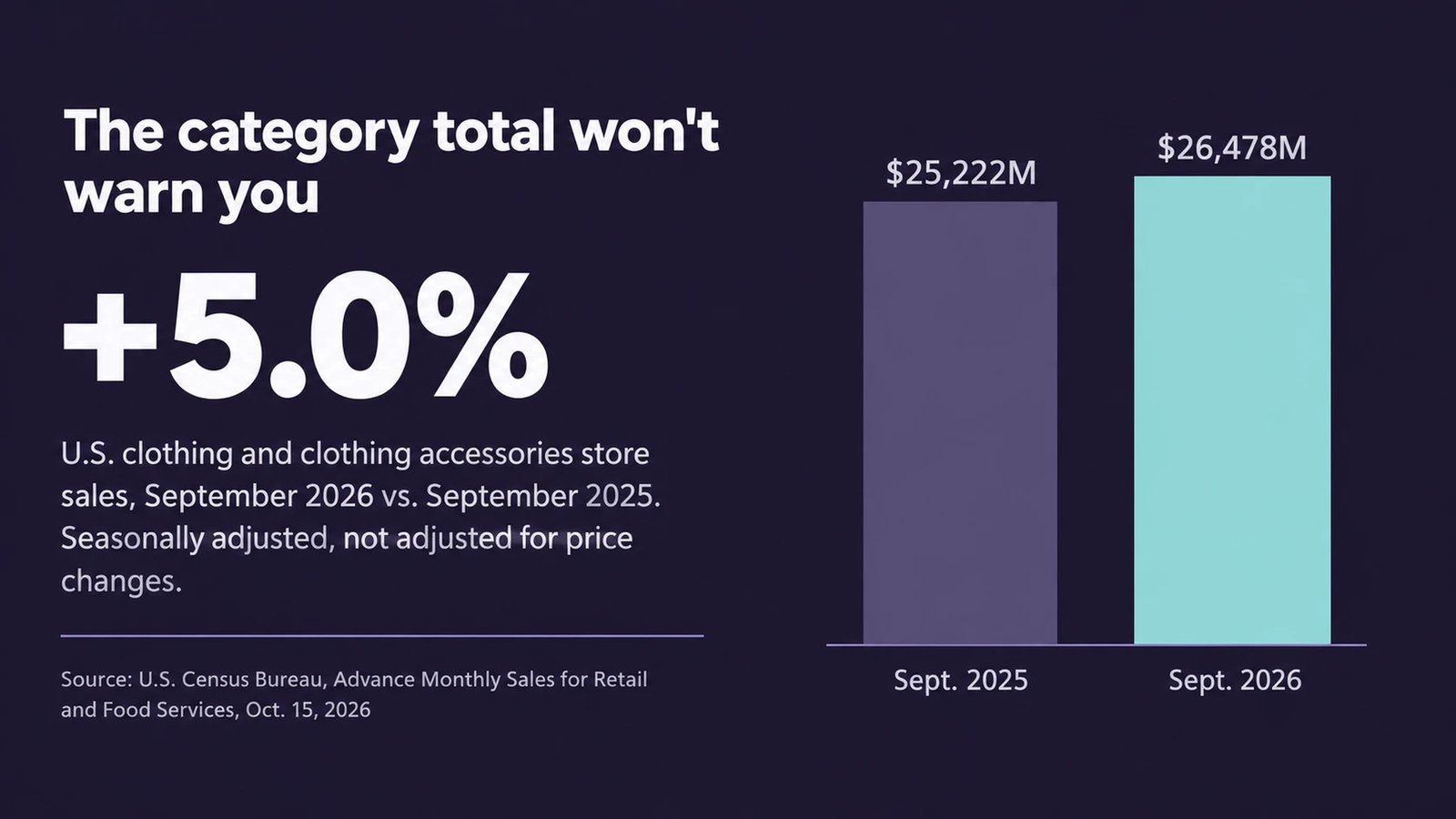
Part of what makes the call hard is that the category total won’t warn you. The U.S. Census Bureau’s advance estimate for September 2026 puts sales at clothing and clothing accessories stores at $26,478 million, seasonally adjusted, against $25,222 million in September 2025. The gain is 5.0 percent, and the figure isn’t adjusted for price changes. It’s good news for the category and not much help to a brand deciding whether its best-known style gets another season. A market that is healthy can sit around a hero style that has stopped pulling its weight, because the total says nothing about any one brand.
Destination XL, which sells big and tall men’s clothing, shows what it looks like when the customer moves before the line does. Its second-quarter fiscal 2026 comparable sales fell 3.5 percent, and the company puts that mainly on traffic, particularly in stores. The more telling finding is in its own research, which indicates that a meaningful share of its customers are now using GLP-1 medications, changing their sizing needs over time. The company believes those medications are contributing to structural changes in demand.
It also describes what that can do to buying. Some customers may hold off on clothes while their size is changing quickly, and many say they plan to come back once it settles. The company calls that a near-term challenge and a long-term opportunity, and it’s broadening select assortments into smaller sizes in response. A sales report would show those paused purchases only as a softer number, not the reason behind them. The useful question for any brand is what a change like that looks like before it reaches the assortment: which sizes sell through first, which come back and what customers start asking for.
Preference surveys give another view of the consumer. Piper Sandler’s fall 2026 teen survey, as reported by SGB Media, put athletic apparel brands’ mindshare at 33 percent. Last fall it was 37 percent, and in fall 2023 it was 47 percent. It’s now close to the survey’s 18-year average of 29 percent. Preference also seems to be moving between performance brands, not only away from them. One outdoor brand entered the top 10 in athletic apparel among all upper-income teens, and another re-entered it among upper-income male teens.
Brand-level results show how late a decline becomes official. Oxford Industries reported Lilly Pulitzer net sales of $85.2 million for the second quarter of fiscal 2026, down 5.6 percent from $90.3 million, and CEO Tom Chubb attributed the softness primarily to product and marketing challenges the company can address. Columbia Sportswear’s 10-K for fiscal 2025 reports Mountain Hardwear net sales of $100.2 million, down 8 percent from $108.6 million in 2024, or 7 percent in constant currency. A full-year figure like that lands after the seasons it covers are over, and the team has usually already made its calls on the next couple of seasons.
Companies give more than one reason for a decline, and the filings above don’t tie any decline to a late call. Destination XL points to traffic and to what it believes is a change in its customers’ demand. Oxford’s CEO points to product and marketing. A sales report can’t separate those on its own.
What shoppers are saying, buying and sending back shows up sooner, and that’s the case for the decision point. Before a style is locked in, put what consumers are doing now next to the sales history, and write down what would change the call before the team starts debating it. It might be a shift in the sizes shoppers keep, a style coming up less often when people talk about the category, or returns rising for a reason that wasn’t there last season. Bring in the designer, the developer and the product line manager while the call is still open. Doing it at line planning costs a conversation. Doing it after the plateau costs a season.
A hero style has to keep earning its place on the line. Reading the consumer early is how a team learns whether it still does.
Think of the hero style that has carried your line the longest. I’m curious what would tell your team it’s time to change it.
With research from SGB Media and U.S. Census Bureau.